
- 15/10/2026
- Dr. Rupali Bandgar
- 0 Comments
- Blogs
12 Doctor-Recommended Ways to Relieve Constipation
Do you strain a lot in the toilet? Do you pass hard stools only once in two or three days? Please do not worry. Many people in India face this problem. The good news is that simple changes in food and daily habits can help in most cases.
This blog explains how to relieve constipation in an easy way. It also tells you when home care is not enough. The advice here is based on the clinical experience of Dr. Rupali Bandgar-Jankar. She is a Consultant Gastrophysiologist and Biofeedback Specialist at Kaizen Gastro Care. She has over 8+ years of experience in GI motility studies and has treated more than 3,000 patients with constipation, pelvic floor disorders and other digestive problems.
What Causes Constipation?
Constipation means passing stool fewer than three times a week. It also means having difficulty while passing stool. The common causes are:
- Too little fibre in the diet
- Not drinking enough water
- Sitting for long hours
- Stress and less sleep
- Holding back the urge to pass stool
- Some medicines, like iron tablets and certain painkillers
- Thyroid problems and diabetes
- Slow movement of food in the colon
- Weak or uncoordinated pelvic floor muscles
When you know the cause, it is easier to choose the right constipation treatment.
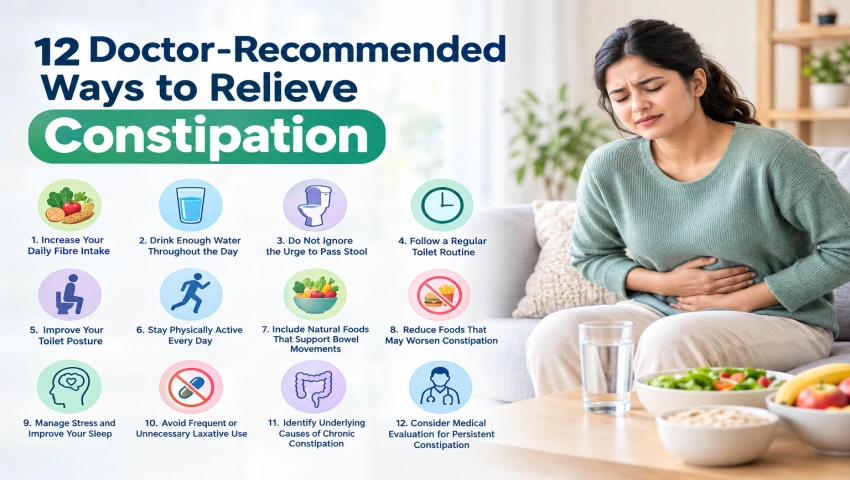
12 Doctor-Recommended Ways to Relieve Constipation:
1. Increase Your Daily Fibre Intake:
Most adults need 25 to 30 grams of fibre every day. Fibre makes the stool soft and bulky. Add it slowly over two weeks. If you increase it suddenly, you may get gas and bloating.
2. Drink Enough Water Throughout the Day:
Fibre needs water to work well. Drink 2 to 3 litres of water daily. If your doctor has limited your fluids, follow that advice. Sip water through the day. Do not drink it all at once.
3. Do Not Ignore the Urge to Pass Stool:
Do not hold back when you feel the urge. Stool becomes dry and hard if it stays inside for long. With time, the rectum also stops sending the signal properly. Go to the toilet as soon as you feel the need.
4. Follow a Regular Toilet Routine:
Your body likes a fixed routine. Sit in the toilet at the same time every day. The best time is 20 to 30 minutes after breakfast. Do not rush. Do not sit for too long with your mobile phone.
5. Improve Your Toilet Posture:
Posture makes a big difference. If you use a Western toilet, keep a small stool under your feet. Your knees should be higher than your hips. Lean a little forward. This position relaxes the muscles, and stool passes with less strain.
6. Stay Physically Active Every Day:
Movement keeps your gut active. Walk briskly for 30 minutes daily. Yoga and light stretching also help in regular bowel movements.
7. Include Natural Foods That Support Bowel Movements:
These foods that help constipation are easily available at home:
- Papaya, guava, pear and prunes
- Soaked raisins (kishmish)
- Isabgol (psyllium husk)
- Oats, ragi and whole wheat
- Dal, rajma and chana
- Flax seeds
- Curd for good gut bacteria
Together, these make a simple high fibre diet for constipation. They are also trusted constipation home remedies and give natural constipation relief.
8. Reduce Foods That May Worsen Constipation:
Some foods can make stools harder. Eat less of:
- Maida items like white bread and biscuits
- Fried snacks
- Packaged and processed foods
- Too much cheese
- Too much tea or coffee
A balanced constipation diet works better than any quick fix.
9. Manage Stress and Improve Your Sleep:
Your gut and brain are closely connected. Stress can cause irregular bowel movements. Sleep for 7 to 8 hours every night. Do deep breathing or meditation daily.
10. Avoid Frequent or Unnecessary Laxative Use:
Laxatives give quick constipation relief. But using them again and again is not good. Your bowel may start depending on them. Take them only on your doctor’s advice.
11. Identify Underlying Causes of Chronic Constipation:
Chronic constipation means constipation that stays for many weeks or months. It may be due to thyroid problems, diabetes or medicines. It can also be due to a slow colon or pelvic floor problems. Treating the real cause is the best solution.
12. Consider Medical Evaluation for Persistent Constipation:
If home remedies do not work in three to four weeks, please get tested. Tests like Colon Transit Study, anorectal manometry and balloon expulsion test can find the exact problem. The right test leads to the right treatment.
When Should You See a Doctor for Constipation?
Meet a doctor soon if you have:
- Blood in the stool
- Weight loss without any reason
- Severe or continuous stomach pain
- Black or very thin stools
- Sudden constipation after 50 years of age
- Family history of colon cancer
- Constipation for more than three weeks
- Stool leakage or a feeling of a bulge in the rectum
Do not ignore these signs.
Can Chronic Constipation Be Caused by Pelvic Floor Dysfunction?
Yes, it can. Constipation and pelvic floor dysfunction often come together. Here, the pelvic muscles do not relax while passing stool. Sometimes they even become tight. So stool does not come out easily, even if it is soft.
The common signs are:
- Straining a lot
- Feeling that the stomach is not fully clear
- Needing to press the area or use fingers to pass stool
Long-term straining can also weaken the pelvic floor. This may lead to stool leakage or rectal prolapse. Early check-up can prevent these problems.
How a Gastrophysiologist Can Help With Chronic Constipation?
Many people with chronic constipation try diet changes, isabgol and laxatives. Some still get no relief. In such cases, the problem may not be food or water. It may be how the colon or the pelvic floor muscles are working. This is where a gastrophysiologist helps.
Why Is Motility Testing Needed?
In many patients, endoscopy and colonoscopy look normal. Yet the constipation continues. The reason is often a functional problem. Either the colon moves food too slowly, or the pelvic muscles do not relax during a bowel movement. Motility tests find the exact cause so that the treatment is correct.
Tests Used to Find the Cause:
- High-resolution anorectal manometry: A thin, soft tube measures the pressure of the anal and rectal muscles. It shows whether the muscles relax and squeeze properly.
- Balloon expulsion test: A small balloon is placed in the rectum. The test checks whether you can pass it out normally. It helps to detect a problem in passing stool.
- Colon Transit Study: You swallow small markers, and an X-ray is taken after a few days. It shows how fast food moves through the colon and whether the colon is slow.
These tests are safe and take little time. They are done only when needed.
Treatment Based on the Findings:
- Biofeedback therapy is the main treatment when pelvic floor dysfunction is found. Sensors show your muscle activity on a screen. A trained specialist then guides you to relax and push in the right way. It is painless and drug-free. With regular sessions, many patients pass stool more easily and strain less.
- Diet and lifestyle guidance is planned as per your test results. For a slow colon, the plan may be different from that for a pelvic floor problem.
- Medicines may be advised when needed. If tests show a problem that needs surgery, such as rectal prolapse, the patient is referred for a surgical opinion.
Who Should Consider This?
Consider a gastrophysiologist if you:
- Have had constipation for more than three months
- Strain a lot even with soft stools
- Feel that the bowel is not fully empty
- Need to press the area or use fingers to pass stool
- Have stool leakage
- Get no relief from laxatives or diet changes
Conclusion:
Constipation is common, but you do not have to live with it. For most people, simple steps help. Eat more fibre, drink enough water, stay active, and follow a regular toilet routine. Natural foods and good sleep also support smooth bowel movements. Use laxatives only when your doctor advises.
But if hard stools, straining or irregular bowel movements continue for weeks, do not wait. Chronic constipation often has a hidden cause, such as a slow colon or pelvic floor dysfunction. Proper tests like a Colon Transit Study and anorectal manometry can find it. Once the cause is clear, treatments like biofeedback therapy can bring lasting relief.
Take the first step today. Your gut health matters.
Frequently Asked Questions About Constipation:
Start with a glass of warm water in the morning. Eat a fibre-rich fruit like papaya, guava or soaked prunes. Take a 15 to 20 minute walk. Then sit in the toilet without rushing. For many people, this gives natural constipation relief within a few hours. If you have constipation again and again, fix your daily diet and habits instead of looking for quick fixes.
Simple constipation home remedies work well for most people:
- Eat more fibre through fruits, vegetables, dal and whole grains
- Take 1 teaspoon of isabgol in a glass of water at night
- Drink 2 to 3 litres of water daily
- Walk or do yoga every day
- Keep a small stool under your feet while using a Western toilet
- Go to the toilet at the same time every day
If there is no improvement in three to four weeks, please see a doctor.
Papaya, guava, pear, prunes, soaked raisins, oats and flax seeds are good choices. Curd also helps because it gives good gut bacteria. Cooked vegetables like bottle gourd (lauki), spinach and carrot are gentle on the stomach. These foods that help constipation work best when taken with enough water.
Most adults should drink 2 to 3 litres of water in a day. Sip it slowly through the day. Drink a glass of warm water in the morning too. Water is especially important when you eat more fibre. Without enough water, fibre can make stools harder. If you have a heart or kidney problem, ask your doctor about the right amount.
Yes, it does. Physical activity keeps the gut moving and helps stool pass easily. A brisk walk of 30 minutes daily is enough for most people. Yoga poses and light stretching also help. Sitting for long hours can slow down the bowel, so take short walking breaks during your day.
Follow a simple constipation diet. Eat fibre-rich foods like fruits, green vegetables, dal, oats, ragi and whole wheat roti. Add curd or buttermilk. Drink enough water and warm fluids. Avoid maida items, fried snacks, packaged foods and too much tea or coffee. These can make hard stools worse.
See a doctor if constipation lasts more than three weeks or does not improve with home care. Do not wait if you notice blood in the stool, black stools, weight loss without reason or severe stomach pain. Also get checked if constipation starts suddenly after 50 years of age or if there is a family history of colon cancer. A constipation specialist in Pune can find the exact cause through proper tests.
Yes, it can. In constipation and pelvic floor dysfunction, the pelvic muscles do not relax while passing stool. Sometimes they tighten instead. So stool does not come out easily, even if it is soft. Common signs are heavy straining, a feeling of incomplete emptying and needing to use fingers to pass stool. Tests like anorectal manometry can confirm it. Biofeedback therapy can then retrain the muscles and give lasting relief.