
- 11/08/2026
- Dr. Rupali Bandgar
- 0 Comments
- Blogs
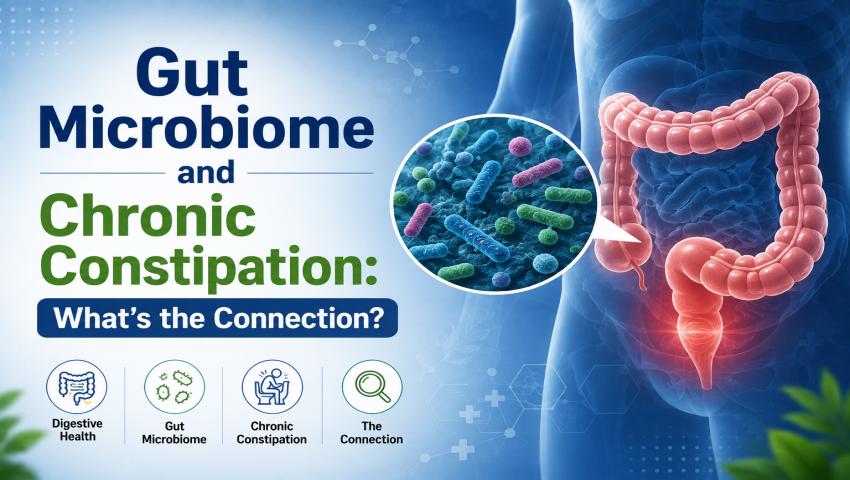
Gut Microbiome and Chronic Constipation: What’s the Connection?
Do you often feel bloated, heavy, or unable to pass stools easily? You are not alone. Chronic constipation troubles millions of people in India today. Many patients try one home remedy after another, but the real cause is often ignored. That cause is hiding deep inside the gut, in trillions of tiny bacteria that most people never think about.
Dr. Rupali Bandgar-Jankar, a leading Gastrophysiologist in Pune, explains that a healthy gut microbiome plays a big role in smooth digestion. When these bacteria go out of balance, your bowel movements slow down, and constipation becomes a regular problem. In this blog, we will understand this connection in simple words, along with foods, lifestyle tips, and treatment options that actually help.
What Is the Gut Microbiome?
The gut microbiome is a community of trillions of bacteria, viruses, and fungi living inside your intestines. Don’t worry, most of these are “good” bacteria that work for your health, not against it.
These tiny organisms help in many ways:
- They break down food that your stomach cannot digest fully
- They produce important vitamins like Vitamin K and some B vitamins
- They protect the gut lining from harmful germs
- They support your immune system
- They help control inflammation in the body
Think of your gut microbiome as a small, busy factory. When all the workers (bacteria) are doing their job well, digestion runs smoothly. When some workers go missing or harmful ones take over, the whole system slows down.
What Is Chronic Constipation?
Chronic constipation means having fewer than three bowel movements a week, and this pattern continues for more than three months. It is not just about going less often. Common symptoms include:
- Hard, dry, or lumpy stools
- Straining while passing stools
- A feeling that the bowel is not fully empty
- Bloating and stomach discomfort
- Needing to use fingers or pressure to help pass stool, in severe cases
If this happens occasionally, it may just be due to less water or fibre. But when it becomes a regular pattern, it is called chronic constipation, and it needs proper attention.
How Does the Gut Microbiome Affect Digestion?
Your gut bacteria do more than just sit in your intestines. They actively help move food and waste through your digestive tract. Here is how:
- Good bacteria break down fibre from fruits, vegetables, and grains
- This process produces short-chain fatty acids, which act like fuel for your gut lining
- These fatty acids also stimulate gut motility, meaning they help the intestine muscles contract and push stool forward
- Healthy bacteria also keep the gut lining moist, which makes stool easier to pass
When the gut bacteria are balanced, this whole system works like a well-oiled machine. When it is disturbed, digestion becomes slow and irregular.
Can an Unhealthy Gut Microbiome Cause Constipation?
Yes, medical research clearly supports this link. When there is a gut bacteria imbalance, also called dysbiosis, the number of helpful bacteria goes down, and harmful or less useful bacteria increase.
This imbalance affects digestion in several ways:
- Less short-chain fatty acid production, which slows gut movement
- Increased gas and bloating, which adds to discomfort
- Weaker gut lining, which affects nutrient absorption
- Slower transit time, meaning food takes longer to pass through the intestines
Many patients who come to Kaizen Gastro Care with long-standing constipation often have an underlying gut bacteria imbalance that was never checked before.
Common Signs of an Unbalanced Gut Microbiome:
Your gut often gives warning signs before things get serious. Watch out for:
- Frequent bloating and gas after meals
- Irregular bowel movements, sometimes loose, sometimes hard
- Feeling tired or sluggish after eating
- New food intolerances, like discomfort after dairy or wheat
- Skin problems such as acne or rashes
- Frequent stomach infections or upset stomach
- Bad breath, even after brushing properly
If you notice two or more of these signs regularly, your gut health may need attention.
What Causes an Imbalance in Gut Bacteria?
Several everyday habits can silently disturb your gut bacteria:
- Low fibre diet: Eating too much refined food and too little fibre starves good bacteria
- Excess sugar and processed food: These feed harmful bacteria and yeast
- Overuse of antibiotics: Antibiotics kill bad bacteria, but they also kill good ones
- Chronic stress: Stress hormones directly affect gut bacteria and gut movement
- Lack of physical activity: A sedentary lifestyle slows down intestinal movement
- Poor sleep patterns: Bad sleep disturbs the natural gut-brain connection
- Insufficient water intake: Water is needed to keep stool soft and bacteria active
Identifying which of these factors applies to you is the first step towards long-term constipation relief.
Foods That Support a Healthy Gut Microbiome:
Good food is the easiest way to improve gut microbiome naturally. Include these in your daily diet:
- Fruits and vegetables: Papaya, banana, spinach, and beetroot are rich in fibre and help feed good bacteria
- Whole grains: Oats, brown rice, jowar, and whole wheat add bulk to stool and support digestion
- Fermented foods: Curd, buttermilk, and idli or dosa batter contain natural probiotics
- Legumes: Moong dal, chana, and rajma are high in fibre and plant protein
- Nuts and seeds: Flaxseeds and chia seeds soaked in water can ease constipation naturally
Try to add a mix of these foods every day, rather than depending on just one item.
Foods to Avoid If You Have Chronic Constipation:
Some foods make constipation worse by disturbing gut bacteria or slowing digestion further:
- Excess fried and oily food, which is hard to digest
- Processed snacks and bakery items, low in fibre and high in preservatives
- Red meat in large quantities, which digests slowly
- Sugary beverages and packaged juices
- Too much dairy without enough fibre alongside it
- Alcohol and excess caffeine, which can dehydrate the body
Reducing these foods, even gradually, can bring noticeable constipation relief within a few weeks.
Lifestyle Changes That Can Improve Gut Health:
Diet alone is not enough. Daily habits matter just as much:
- Drink at least 2 to 3 litres of water daily to keep stool soft
- Exercise regularly, even a 30-minute walk can improve gut motility
- Sleep for 7 to 8 hours each night, as poor sleep disturbs gut bacteria
- Manage stress through yoga, meditation, or breathing exercises
- Avoid skipping meals, as irregular eating disturbs digestion
- Chew food slowly and mindfully to help the digestion process from the very first bite
Small, consistent habits often work better than sudden, drastic changes.
Can Probiotics and Prebiotics Help with Constipation?
Yes, probiotics for constipation are widely recommended by doctors and dietitians. But it helps to understand the difference:
- Probiotics are live good bacteria. You get them from curd, buttermilk, fermented foods, and some supplements.
- Prebiotics are special fibres that feed these good bacteria. They are found in foods like garlic, onion, banana, and oats.
Together, probiotics and prebiotics restore healthy gut bacteria, improve stool consistency, and support regular bowel movements. However, it is best to take them regularly and consistently, rather than expecting overnight results.
When Should You See a Doctor for Chronic Constipation?
Home remedies work for many people, but sometimes medical help is necessary. Consult a doctor if you notice:
- Constipation lasting more than three weeks despite diet changes
- Blood in stools
- Unexplained weight loss
- Severe abdominal pain
- No relief despite trying fibre, water, and lifestyle changes
- Constipation alternating with diarrhoea
Early diagnosis helps identify the exact cause and prevents complications later.
How Is Chronic Constipation Diagnosed?
Dr. Rupali Bandgar-Jankar, an expert in Chronic Constipation treatment in Pune, uses advanced, non-invasive diagnostic tools to find the exact cause of constipation:
- Colonic Transit Study: This test checks how long it takes for food to move through your colon.
- High-resolution Anorectal Manometry: This measures the strength and coordination of the rectal and anal muscles.
- Balloon Expulsion Test: This checks your ability to push out a small balloon, similar to passing stool.
- 24-hour pH Study: This test evaluates acid reflux, which is sometimes linked to other digestive issues.
These tests help identify whether the constipation is due to slow gut movement, muscle coordination problems, or pelvic floor disorders, so that treatment can be planned accurately.
Treatment Options for Chronic Constipation:
Treatment is never “one size fits all.” Every patient’s gut is different, and the root cause must be found first through proper diagnosis. Based on the diagnosis, Dr. Rupali Bandgar-Jankar plans a treatment approach that may include:
- Dietary and lifestyle correction: A customised fibre and water intake plan, tailored to the individual’s daily routine and habits, not a generic diet chart.
- Probiotics and prebiotics: These are used to restore healthy gut bacteria and improve stool consistency over time.
- Biofeedback therapy: A special, non-invasive therapy for patients with pelvic floor disorders, where the muscles used for passing stool do not coordinate properly.
- Pelvic floor muscle retraining: Guided exercises that help patients learn to relax and coordinate their muscles correctly during bowel movements.
- Medications: Laxatives or other medicines are given only when necessary, and always under proper medical guidance. Self-medicating with laxatives for a long time can actually worsen gut health.
- Treating underlying conditions: Sometimes constipation is linked to thyroid problems, diabetes, or certain medicines. Identifying and treating these causes is important for long-term relief.
- Regular follow-up and monitoring: Constipation treatment is not a one-time fix. Regular follow-up helps track improvement and adjust the treatment plan as needed.
- Patient education: Understanding your own body, your triggers, and your bowel patterns helps you manage constipation better in the long run.
Dr. Rupali Bandgar-Jankar specialises in biofeedback therapy, a safe, non-invasive, and highly effective constipation treatment, especially for patients whose constipation is linked to pelvic floor muscle coordination problems rather than diet alone.
Tips to Keep Your Gut Healthy Every Day:
Good gut health is built through small, consistent daily habits, not one big change. Here are some simple tips you can follow every day:
- Eat fibre-rich meals at fixed times each day. A regular eating schedule trains your gut to work on a routine, which supports timely bowel movements.
- Stay physically active. Even a simple 30-minute daily walk stimulates gut movement and helps prevent sluggish digestion.
- Include fermented foods like curd or buttermilk in your meals. These add natural probiotics that support good bacteria growth.
- Limit processed and sugary food as much as possible. These foods feed harmful bacteria and reduce the good ones over time.
- Practice stress management through yoga or breathing exercises. Since the gut and brain are closely connected, reducing stress directly helps improve digestion.
- Never ignore the urge to pass stool. Holding it in regularly can weaken your natural bowel reflex over time.
- Chew your food properly and eat slowly. This reduces the digestive workload on your gut and helps nutrients absorb better.
- Avoid excess use of antibiotics and painkillers without medical advice. These medicines can disturb your gut bacteria balance if used unnecessarily.
- Maintain a consistent sleep schedule. Poor or irregular sleep disturbs the gut-brain connection and can affect digestion.
- Keep a simple food and symptom diary. Noting what you eat and how your gut reacts can help you and your doctor identify triggers faster.
- Get regular health checkups. This is especially important if constipation is a recurring issue, so that any underlying cause can be caught early.
Frequently Asked Questions (FAQs):
Yes, an imbalance in gut bacteria reduces the production of substances that help move stool through the intestines. This often leads to chronic constipation.
Yes, natural probiotics like curd and buttermilk are safe for most people when taken regularly as part of a balanced diet.
With consistent diet and lifestyle changes, most people notice improvement within 4 to 6 weeks. However, results can vary from person to person.
No, biofeedback therapy is completely non-invasive and painless. It simply trains your muscles to work better through guided exercises.
If constipation lasts more than three weeks, or comes with blood in stools, severe pain, or unexplained weight loss, consult a doctor immediately.
Yes, the gut and brain are closely connected. Chronic stress can change gut bacteria composition and slow down bowel movements over time.
Not always. Mild, occasional constipation can often be managed with diet and lifestyle changes. However, if it becomes a regular pattern, a proper diagnosis helps avoid long-term complications.
Conclusion:
Your gut microbiome plays a much bigger role in digestion than most people realise. A balanced gut supports smooth, regular bowel movements. An imbalance, on the other hand, often leads to chronic constipation, bloating, and discomfort. The good news is that simple changes in diet, hydration, and daily habits can bring lasting relief for most people.
If constipation continues despite your best efforts, it is important to get proper diagnosis rather than depending on home remedies indefinitely. For personalised diagnosis and advanced treatment, consult Dr. Rupali Bandgar-Jankar, a trusted Gastrophysiologist, at Kaizen Gastro Care, Wakad, Pune. With over 8+ years of experience and more than 3,000 patients treated, she offers evidence-based Chronic Constipation treatment in Pune using advanced diagnostic tools and biofeedback therapy.