
- 28/07/2026
- Dr. Rupali Bandgar
- 0 Comments
- Blogs
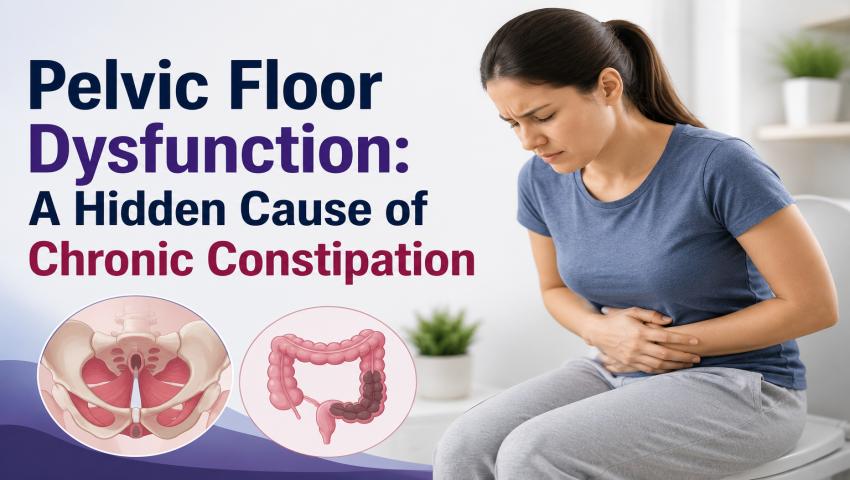
Pelvic Floor Dysfunction: A Hidden Cause of Chronic Constipation
Are you struggling with constipation even after eating fibre-rich food and drinking enough water? You are not alone. Many patients try every home remedy, yet nothing works. In such cases, the real problem may not be your diet at all. It could be Pelvic Floor Dysfunction (PFD), a hidden but common cause of chronic constipation.
Dr. Rupali Bandgar-Jankar, a leading Female Gastrophysiologist in Pune, explains this condition in simple words so patients can understand it better and seek the right treatment on time.
What Is Pelvic Floor Dysfunction?
The pelvic floor is a group of muscles at the base of your pelvis. These muscles support your bladder, bowel, and other pelvic organs. They also help control bowel movements.
In Pelvic Floor Dysfunction, these muscles do not relax or contract properly. This makes it difficult to pass stool, even when the urge is present. It is a common but often ignored condition among both men and women.
Can Pelvic Floor Dysfunction Cause Chronic Constipation?
Yes, it can. PFD is one of the most under-diagnosed causes of chronic constipation.
Many patients try more water, fibre, and exercise, but the constipation still does not go away. That’s because the real problem is not diet — it’s the muscles. Normally, pelvic floor muscles relax while passing stool. In PFD, they tighten instead, creating a blockage-like feeling. So no amount of fibre or water can fix it. Constant straining, long toilet time, or incomplete evacuation are signs of poor muscle coordination, not “normal” issues.
This is where a Gastrophysiologist helps. Through simple tests like anorectal manometry, the real cause can be found — instead of just treating symptoms with fibre or laxatives. The right treatment, like Biofeedback Therapy, then gives long-term relief.
What Is Pelvic Floor Dyssynergia?
Pelvic Floor Dyssynergia is a specific type of PFD. In this condition, the muscles that should relax while passing stool actually tighten instead. This creates a blockage-like feeling, even though there is no physical obstruction.
Patients often feel like something is “stuck” and strain a lot, but very little stool comes out.
Common Symptoms of Pelvic Floor Dysfunction:
Some common signs include:
- Excessive straining during bowel movements
- Feeling of incomplete evacuation
- Needing to support the pelvic area or vaginal wall to pass stool
- Long time spent in the toilet
- Lower back or pelvic pain
- Occasional constipation alternating with mild incontinence
If these symptoms sound familiar, it is time to consult a specialist for Pelvic Floor Disorders treatment.
Who Is at Risk of Developing Pelvic Floor Dysfunction?
- Women after childbirth
- People who strain frequently during bowel movements
- Individuals with a history of pelvic surgery
- People with high stress levels
- Older adults with weaker pelvic muscles
Why Laxatives Alone May Not Solve the Problem?
Many patients depend on laxatives for years without real relief. Laxatives only soften the stool. They do not correct the muscle coordination problem. If PFD is the actual cause, laxatives may give temporary comfort but will not treat the root issue.
Long-term use of laxatives can also cause dependency. That is why proper diagnosis is important before continuing any Chronic Constipation treatment.
How Is Pelvic Floor Dysfunction Diagnosed?
If simple lifestyle changes like drinking more water and increasing fibre intake do not help, a gastroenterologist or a trained specialist can confirm PFD through specific tests, such as:
- Anorectal Manometry: This test checks the pressure and coordination of the anal and pelvic muscles.
- Balloon Expulsion Test: This test checks how well a person can push out a small balloon, mimicking the passing of stool.
These tests are simple, safe, and give a clear picture of what is happening inside the body.
How Biofeedback Therapy Helps Retrain the Pelvic Floor?
Biofeedback Therapy is considered the most effective treatment for PFD. It is also known as Pelvic Floor Physical Therapy (PFPT).
In this therapy, sensors help the patient visualise their own muscle movements on a screen. This visual feedback helps patients understand which muscles to relax and which to tighten while passing stool. With regular sessions, the brain and pelvic muscles slowly learn to work together again.
This is why Biofeedback Therapy for constipation in Pune has become a preferred, non-surgical treatment option for many patients.
Along with this, relaxation techniques also help. Since stress often makes pelvic muscles tighten, therapies that calm the nervous system show good results. Behavioural training, such as the “1:2 breathing ratio” and using a toilet footstool while passing stool, can also reduce straining significantly.
Today, more patients are opting for Biofeedback Therapy in Pune and across Biofeedback therapy in Maharashtra, as it offers lasting relief without medicines or surgery.
Lifestyle Changes That Support Better Bowel Movements:
Along with therapy, small daily changes can help:
- Sit with knees higher than hips using a footstool
- Avoid excessive straining
- Practice slow, coordinated breathing while passing stool
- Stay physically active
- Manage stress through yoga or meditation
- Maintain a fibre-rich diet with enough water intake
When Should You See a Gastrophysiologist?
You should consult a Gastrophysiologist if:
- Constipation continues for more than a few weeks
- Laxatives are not giving relief anymore
- You feel constant straining or incomplete evacuation
- Symptoms are affecting your daily life
Consulting the Best Gastrophysiologist in Maharashtra early can save you years of unnecessary discomfort.
Why Early Diagnosis Matters?
- Many patients think constipation is “normal” and suffer silently for years
- Some feel shy to talk about it, others just get used to daily straining
- Ignoring PFD for long can lead to complications like:
- Haemorrhoids (piles)
- Anal fissures
- Worsening pelvic pain
- Rectal prolapse in severe cases
- Chronic constipation also causes tiredness, bloating, and loss of appetite
- It can affect confidence and mental peace too
- Early diagnosis makes treatment simpler and faster
- Biofeedback Therapy works best when started early, before muscles form a wrong long-term pattern
- Result: quicker recovery, fewer complications, better quality of life
If constipation has continued for weeks or months, do not wait. Early diagnosis is the key to a healthy digestive life.
Conclusion:
Chronic constipation is not always about diet. Sometimes, the real cause lies in the coordination of your pelvic muscles. Pelvic Floor Dysfunction is treatable, and Biofeedback Therapy offers a safe, effective, and long-term solution.
Dr. Rupali Bandgar-Jankar, Head of the GI Motility Department at Kaizen Gastro Care, Pune, has helped thousands of patients overcome chronic constipation through advanced diagnostic tools and personalised Biofeedback Therapy. If you are struggling with unexplained constipation, do not wait. Book a consultation today and take the first step towards better digestive health.
Frequently Asked Questions (FAQs):
Yes, it is more common than people realise, especially among women after childbirth and individuals who strain frequently during bowel movements.
With proper diagnosis and Biofeedback Therapy, most patients see significant and lasting improvement.
No, it is a completely non-invasive and painless therapy.
This varies from patient to patient, depending on symptom severity. Your doctor will suggest a personalised plan after diagnosis.
Dr. Rupali Bandgar-Jankar, with over 8 years of experience as a Consultant Gastrophysiologist, offers advanced diagnosis and Biofeedback Therapy for Pelvic Floor Dysfunction and chronic constipation at Kaizen Gastro Care, Wakad, Pune. She has successfully treated more than 3,000 patients and is recognised as the first dedicated Consultant Gastrophysiologist and Biofeedback Specialist practicing in Pune, Maharashtra.
You can book an appointment by calling 097636 35252 or emailing drrupalibandgar@gmail.com. You can also visit her clinic at Kaizen Gastro Care, Shop No. 208/209, Oriana Crest Building, Datta Mandir Rd, Wakad, Pune, Maharashtra 411057. For more details, visit www.drrupalibandgar.com.