
- 28/08/2026
- Dr. Rupali Bandgar
- 0 Comments
- Blogs
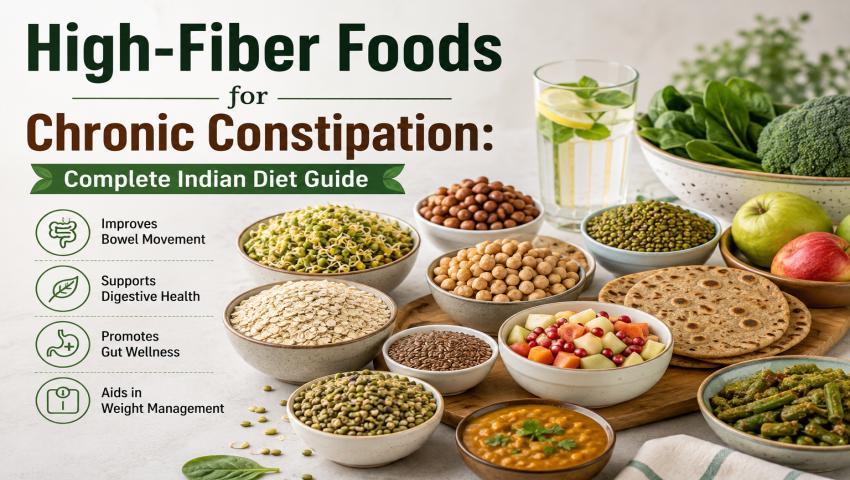
High-Fiber Foods for Chronic Constipation: Complete Indian Diet Guide
Constipation is one of the most common digestive problems in India. Many people struggle with hard stools, irregular bowel movements, and constant bloating. The good news is that a simple change in diet can bring big relief. Fiber plays a major role here.
Dr. Rupali Bandgar-Jankar, a well-known Gastrophysiologist in Pune, often tells her patients that most cases of chronic constipation improve with the right high-fiber foods and a few daily habits. In this blog, we will cover the best fiber-rich Indian foods, daily fiber needs, foods to avoid, and when to consult a doctor.
Why Fiber Is Important for Chronic Constipation?
Fiber is the part of plant food that our body cannot digest. Instead of breaking down, it adds bulk to the stool and helps it move through the intestines easily. This is why fiber-rich Indian foods are so important for constipation relief.
How fiber improves bowel movements: Fiber absorbs water in the intestines. This makes the stool softer and bulkier, so it passes through the gut more easily and more often.
Soluble vs. insoluble fiber: There are two types of fiber, and both are needed.
- Soluble fiber dissolves in water and forms a gel-like substance. It slows digestion and helps control blood sugar too. Found in oats, apples, and beans.
- Insoluble fiber does not dissolve in water. It adds bulk to the stool and speeds up its movement through the gut. Found in whole wheat, vegetables, and nuts.
A good diet includes both types for the best digestive health.
How Much Fiber Do Adults Need Every Day?
Daily fiber requirements for men and women: Adult men need around 30 to 38 grams of fiber per day. Adult women need around 21 to 25 grams per day. These numbers can vary slightly based on age and activity level.
Why most Indians don’t get enough fiber: Despite eating rice, roti, and dal daily, many Indians still fall short of their fiber needs. This happens because:
- Refined flour (maida) has replaced whole wheat in many homes
- Fruits and vegetables are often eaten in small portions
- Processed and packaged snacks have become part of daily meals
- Peeling fruits and vegetables removes fiber-rich skin
Simply adding more variety of natural foods can close this gap quickly.
Best High-Fiber Indian Fruits for Constipation:
- Guava: One of the highest fiber fruits available in India. Guava for constipation works well because of its seeds and skin, both rich in fiber. Try to eat it whole, without removing the skin.
- Papaya: A gentle natural laxative. Papaya for constipation is a favourite home remedy across Indian households. It also contains papain, an enzyme that supports easier digestion.
- Pear: Contains both soluble and insoluble fiber, along with good water content. Eating it with the skin gives maximum fiber benefit.
- Apple with skin: Never peel your apple if you want maximum fiber benefit. The skin alone contains a large part of the fruit’s total fiber.
- Oranges: High in fiber and water, both helpful for softening stool. Eating the fruit is better than drinking only the juice, since juice removes most of the fiber.
- Figs (Anjeer): Traditionally used as a natural remedy for constipation, especially when soaked overnight. Two to three soaked figs in the morning work well for many people.
- Pomegranate: Rich in fiber and antioxidants, and gentle on the stomach even for sensitive digestion.
- Grapes: Contain good water and fiber content, useful as a light snack between meals.
- Chikoo (Sapota): A commonly available Indian fruit with good fiber content, often overlooked despite its benefits.
- Watermelon and muskmelon: High water content along with fiber, which together help soften stool naturally.
Best High-Fiber Indian Vegetables for Better Digestion:
- Spinach (Palak): Rich in fiber and magnesium, which supports gut muscle movement. Best eaten lightly cooked to retain maximum nutrients.
- Carrot: Good source of insoluble fiber, best eaten raw or lightly cooked. Also supports overall digestive and eye health.
- Beetroot: Improves digestion and also supports healthy blood flow. Can be eaten raw in salads or added to sabzi.
- Broccoli: High in fiber and water content, great for regular bowel movements. Light steaming keeps its fiber intact.
- Cabbage: Adds bulk to stool, but should be eaten in moderate amounts to avoid gas, especially for sensitive stomachs.
- Okra (Bhindi): Contains natural mucilage that soothes the digestive tract and supports smoother bowel movement.
- Bottle gourd (Lauki): Light on the stomach, high in water and fiber, and easy to digest even for sensitive gut patients.
- Drumstick (Shevga/Moringa): A traditional Indian vegetable rich in fiber, often used in sambar and curries.
- Sweet potato: A good source of fiber compared to regular potato, and a healthy addition to meals.
- Green leafy vegetables (Methi, Amaranth): Regularly including different greens, not just spinach, gives a wider variety of fiber and nutrients.
Whole Grains That Help Relieve Constipation:
- Oats: One of the best whole grains for constipation, rich in soluble fiber. Works well as upma, porridge, or added to smoothies.
- Whole wheat: Choose whole wheat atta over maida for daily rotis. Look for “chakki atta” or stone-ground flour for maximum fiber.
- Brown rice: Brown rice benefits include higher fiber content compared to white rice, along with a lower glycemic impact.
- Jowar: Jowar benefits digestion and is naturally gluten-free, making it a good option for those with wheat sensitivity.
- Bajra: A traditional grain that supports healthy bowel movement, especially useful during winter months.
- Ragi: Ragi benefits go beyond calcium; it is also fiber-rich and supports gut health, and can be used in dosa, roti, or porridge.
- Barley (Jau): Often overlooked, but rich in soluble fiber and useful in soups, khichdi, or roti.
- Quinoa: A protein and fiber-rich grain that works well as a rice substitute for those looking for variety.
- Millets (mixed): Rotating between different millets like foxtail or kodo millet adds variety and improves overall fiber intake.
Protein-Rich High-Fiber Foods:
- Lentils (Dal): Indian lentils for constipation are an easy daily addition, especially moong and masoor dal, which are also gentle on digestion.
- Chickpeas (Chana): Chickpeas for constipation work well when boiled or sprouted, and can be added to salads or curries.
- Rajma: Rajma for constipation is a fiber-packed favourite in North Indian households, best paired with plenty of water.
- Green peas: A simple vegetable that adds good fiber to any meal, whether in sabzi, pulao, or curries.
- Sprouts: Sprouts for digestion are easy to make at home and boost fiber intake instantly. Mixed sprouts of moong, chana, and matki give the best variety.
- Black-eyed peas (Chawli): A lesser-known but fiber-rich legume, easy to cook into a simple sabzi or usal.
- Soybean and soy chunks: High in both protein and fiber, useful for vegetarians looking to increase daily fiber intake.
- Kidney beans and mixed dals (Mixed dal khichdi): Combining two or three dals together in one meal increases fiber variety at once.
- Peanuts (Groundnuts): A good source of fiber when eaten in moderation, often used in Indian snacks and chutneys.
Nuts and Seeds That Support Healthy Bowel Movements:
- Flaxseeds: Flaxseeds for constipation are highly effective when soaked or ground and added to food.
- Chia seeds: Chia seeds for constipation work by absorbing water and forming a gel that softens stool.
- Sesame seeds: Contain natural oils that help ease bowel movements.
- Almonds: A good source of fiber, best soaked overnight for easier digestion.
- Walnuts: Rich in fiber and healthy fats, supporting overall gut health.
Indian Breakfast Ideas Rich in Fiber:
Starting the day with a high-fiber breakfast makes a real difference. Try these simple options:
- Vegetable oats upma
- Moong dal chilla
- Vegetable poha
- Idli with sambar
- Multigrain paratha
These high-fiber breakfast ideas are easy to prepare and fit well into a regular Indian kitchen.
Foods That Can Make Constipation Worse:
Some common foods can quietly work against your gut health:
- Refined flour (Maida): Found in bread, biscuits, and bakery items. Very low in fiber.
- Processed snacks: Chips and packaged namkeen offer little to no fiber.
- Fast food: Usually low in fiber and high in unhealthy fats.
- Excess dairy: Too much milk or cheese without enough fiber can slow digestion.
- Sugary foods: Sweets and sugary drinks can disturb healthy gut bacteria over time.
Cutting down on these foods, even slowly, supports better and more consistent constipation relief.
Tips to Increase Fiber Without Causing Bloating:
Adding fiber suddenly can cause gas and bloating. Follow these tips instead:
- Increase fiber gradually: Add small amounts every few days rather than all at once.
- Drink enough water: Fiber needs water to work properly, so keep drinking through the day.
- Stay physically active: Regular movement helps the gut process fiber more comfortably.
- Eat a variety of fiber-rich foods: Mixing fruits, vegetables, grains, and lentils works better than depending on just one food.
When High-Fiber Foods Alone Are Not Enough?
Sometimes, even a good diet does not fully solve the problem. This can happen due to:
- Chronic constipation despite a healthy diet: Some patients follow a good diet but still struggle, pointing to a deeper cause.
- Pelvic floor dysfunction: When the muscles used for passing stool do not coordinate properly.
- Slow transit constipation: When the colon itself moves food and waste too slowly.
- When medical evaluation is needed: If diet and lifestyle changes are not helping after a few weeks, it’s time for proper testing.
When Should You Consult a Gastrophysiologist?
Please consult a doctor if you notice these warning signs:
- Constipation lasting more than 3 months: Long-term constipation needs proper check-up, not just home remedies.
- Blood in stools: This should never be ignored, even if it seems minor.
- Severe abdominal pain: Ongoing or sharp pain along with constipation needs medical attention.
- Unexplained weight loss: Sudden weight loss without trying is an important warning sign.
- Failure of diet and laxatives: If fiber, water, and medicines don’t help after a few weeks, further tests are needed.
Early check-up helps find the real cause and gives faster relief.
Frequently Asked Questions (FAQ's):
Guava is among the highest fiber Indian fruits, mainly because of its edible skin and seeds. Legumes like rajma and chickpeas are also excellent fiber sources. Including both fruits and legumes daily gives the best results.
Ripe bananas can help due to their fiber content and natural sugars that support digestion. However, raw or unripe bananas contain more starch and may worsen constipation for some people. It is best to eat bananas only when fully ripe.
Fiber helps significantly in most cases of mild to moderate constipation. However, chronic constipation caused by pelvic floor dysfunction or slow transit constipation may not improve with diet alone. Such cases need proper medical evaluation and targeted treatment.
Moong dal and masoor dal are gentle on digestion and rich in fiber, making them good daily choices. They are easy to digest even for sensitive stomachs. Including them regularly supports smoother bowel movements.
At least 2 to 3 litres of water daily is recommended when increasing fiber intake. Fiber needs enough water to work effectively and soften the stool. Without sufficient water, a high-fiber diet can actually worsen constipation.
Both are helpful in their own way. Oats are rich in soluble fiber, while whole wheat provides insoluble fiber for bulk. Including both in your daily diet gives the most complete benefit.
Yes, increasing fiber too quickly without enough water can cause bloating, gas, and even worsen constipation temporarily. It is best to increase fiber gradually over a few weeks. This allows your gut to adjust comfortably.
If constipation continues for more than 3 months despite diet changes, it is time to see a doctor. Blood in stools, severe pain, or unexplained weight loss are also important warning signs. In such cases, consult a gastrophysiologist promptly for proper diagnosis.
Conclusion:
A high-fiber Indian diet is one of the simplest and most natural ways to manage chronic constipation. Fruits, vegetables, whole grains, lentils, nuts, and seeds together can make a real difference when eaten consistently. However, if constipation continues despite a healthy diet, it may point to an underlying issue that needs proper diagnosis.
For expert guidance and advanced treatment, Consult Dr. Rupali Bandgar-Jankar, a leading gastrophysiologist, at Kaizen Gastro Care, Pune. She offers complete chronic constipation treatment in Pune, including dietary counselling, anorectal manometry test, colon transit study, and biofeedback therapy in Pune for lasting digestive wellness.