
- 17/06/2026
- Dr. Rupali Bandgar
- 0 Comments
- Blogs
How Much Water Should You Drink to Prevent Constipation?
Constipation is one of the most common digestive complaints in India. You strain, you wait, and nothing happens. It is uncomfortable, frustrating, and often affects your whole day. One of the first things people try is drinking more water. And honestly, it is good advice. But how much water is actually enough? And is water alone enough to solve your constipation problem?
In this blog, Dr. Rupali Bandgar-Jankar — India’s leading Consultant Gastrophysiologist and Biofeedback Specialist at Kaizen Gastro Care, Pune — answers these questions simply and clearly.
How Much Water Do You Really Need?
There is no single number that works for everyone. But here is a general guide:
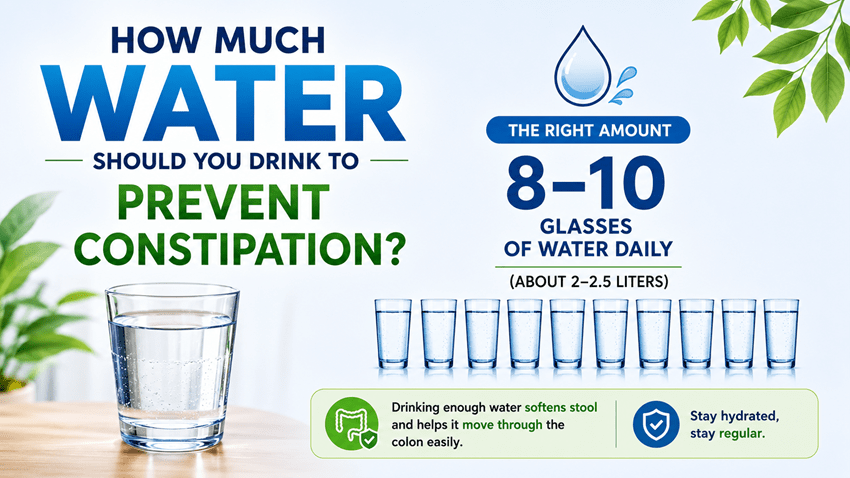
- Adults should aim for 8 to 10 glasses of water per day — roughly 2 to 2.5 litres.
- In India’s hot climate, you may need more, especially in summer.
- If you do physical work or exercise, your water needs go up further.
- Pregnant or breastfeeding women need extra fluids too.
The simple test? Check your urine. If it is pale yellow, you are well hydrated. If it is dark yellow, drink more water right away. Most people do not realise they are mildly dehydrated all day long. This is one of the most common — and most overlooked — reasons for difficulty passing stool.
How Water Helps Relieve and Prevent Constipation?
1. Water Softens Your Stool:
When you eat food, your large intestine absorbs water from it. If you are not drinking enough, your intestine pulls too much water from the stool. The result? Hard, dry stool that is painful and difficult to pass.
Drinking enough water keeps your stool soft and easy to move through the colon. This is one of the simplest ways to prevent constipation and relieve constipation and bloating.
2. Warm Water and Constipation:
This is something Dr. Rupali Bandgar-Jankar often recommends to her patients. Warm water for constipation is not just an old home remedy — there is real logic behind it. Warm water constipation relief works because:
- Warm water stimulates blood flow in the digestive tract.
- It relaxes the intestinal muscles and helps move stool forward.
- It can trigger the gastrocolic reflex — the natural urge to pass stool after eating or drinking.
Starting your morning with a glass of warm water is one of the easiest habits to improve bowel movement daily. Many patients at Dr. Rupali Bandgar-Jankar Clinic have found this simple habit alone makes a noticeable difference. Hot water and constipation — does it help even more? Lukewarm to mildly hot water is ideal. Very hot water can irritate the throat and gut lining. Stick to a comfortable warm temperature.
3. Coconut Water and Constipation:
Coconut water for constipation is another popular and effective option in India. It is naturally rich in electrolytes, magnesium, and potassium — all of which support gut motility. Coconut water in constipation works gently. It hydrates the body, softens the stool, and is easy on the stomach. It is a great constipation drink for those who find plain water boring or difficult to drink in large quantities.
Signs You May Not Be Drinking Enough Water:
Not sure if dehydration is behind your constipation? Watch for these signs:
- Infrequent bowel movements — fewer than 3 times a week
- Hard or lumpy stools that are difficult to pass
- Straining or pain during bowel movements
- Bloating or a feeling of fullness in the abdomen
- Dark yellow urine or feeling thirsty often
- Fatigue or headaches — often linked to mild dehydration
If you have been experiencing difficulty passing stool for more than 2 to 3 weeks, it is not just about water. You need a proper evaluation.
Water Alone Is Not Enough:
1. Add Fibre to Your Diet:
Water and fibre work together. Fibre absorbs water and adds bulk to your stool. Without enough fibre, even 3 litres of water will not fully solve your constipation problem. Good fibre sources: whole grains, dal, sabji, fruits, salads, and flaxseeds.
2. Other Helpful Drinks for Constipation:
Along with plain water, certain drinks for constipation can give your gut extra support:
- Warm lemon water — mild stimulant for the bowels
- Coconut water — hydrating and magnesium-rich
- Buttermilk (chaas) — probiotic-rich, supports gut bacteria
- Vegetable juice — adds fibre and fluids together
3. What About Milk?
Many people ask — is milk good for constipation? The answer is: it depends. For some people, milk is good for constipation when consumed warm, as it can have a mild laxative effect. However, for those who are lactose intolerant, milk can actually cause bloating, gas, or even worsen constipation. If you notice constipation or diarrhea after having milk, it is worth checking for lactose intolerance.
4. Move Your Body:
Physical activity helps the intestines move. Even a 20-minute walk after meals can significantly improve bowel movement. Sitting all day slows digestion down.
5. Do Not Ignore the Urge:
Many people ignore the urge to pass stool due to a busy schedule or lack of access to a clean toilet. This is a surprisingly common cause of worsening constipation. Never suppress the urge when it comes.
When Constipation Needs Medical Attention?
Home remedies and lifestyle changes work well for occasional constipation. But sometimes, the problem runs deeper.
See a doctor if you have:
- Constipation lasting more than 3 weeks despite diet and water changes
- Blood in stool or black tarry stools
- Unexplained weight loss alongside constipation
- Severe bloating or abdominal pain that does not go away
- Alternating diarrhea or constipation — this can signal IBS or other conditions
- Constipation that is not relieved by laxatives
Chronic constipation is not always about lifestyle. It can be caused by pelvic floor dysfunction, slow colonic transit, hormonal issues, or even medication side effects. These need proper diagnosis — not just more water. This is exactly what Dr. Rupali Bandgar-Jankar specialises in. As India’s first Consultant Gastrophysiologist and Biofeedback Specialist, she has treated over 3,000 patients for chronic constipation treatment in Pune using advanced, non-invasive approaches.
At Kaizen Gastro Care, Pune, Dr. Rupali Bandgar-Jankar uses:
- Anorectal Manometry — to check how rectal muscles are working
- Colon Transit Study — to understand how fast food moves through the gut
- Biofeedback Therapy — a non-invasive technique to retrain pelvic floor muscles and restore normal bowel function
If you have tried everything and still struggle with difficulty passing stool, relief of constipation and bloating, or want to genuinely how to control constipation long-term — it is time to consult an expert.
Conclusion:
Drinking enough water — especially warm water for constipation — is one of the simplest and most effective things you can do for your digestive health. Aim for 8 to 10 glasses daily, start your morning with warm water, include coconut water, buttermilk, and fibre-rich foods in your diet, and stay active.
But if constipation keeps coming back, do not keep self-treating. Chronic constipation needs expert attention.
Dr. Rupali Bandgar-Jankar at Kaizen Gastro Care, Pune, is here to help you find the real cause and the right solution.