
- 28/05/2026
- Dr. Rupali Bandgar
- 0 Comments
- Blogs
What Do Anorectal Manometry Reports Actually Mean? (Patient Guide)
Medical reports can look confusing. They are full of complex medical words and numbers. If your doctor advised an Anorectal Manometry test, you might feel a bit anxious. You might also wonder what the final results mean for your health. Understanding your digestive health should not feel like a difficult puzzle. This patient guide breaks down Anorectal Manometry Reports in simple language. We will look at what happens during the test, how to read the findings, and what steps to take next.
To get the most accurate results, it helps to consult a highly trained expert. Dr. Rupali Bandgar-Jankar is an expert gastro physiologist with 8+ years of experience. She helps patients decode these complex reports daily. If you are looking for an Anorectal manometry test in Pune, India, her specialized insights can guide your treatment plan effectively.
What Is Anorectal Manometry and Why Is It Done?
Anorectal manometry is a safe, non-surgical diagnostic test. It measures how well your rectum and anal sphincter muscles work together. The anal sphincter consists of internal and external muscle rings that control the opening and closing of the anus.
Doctors use this test to check the strength of these muscles. It also checks the sensitivity of your rectum and the reflexes that control bowel movements.
Why Do Doctors Recommend This Test?
Your gastroenterologist may suggest this test if you suffer from chronic bowel issues. It provides a clear map of your pelvic floor muscle function. The test helps doctors find the root cause of problems that standard scans like X-rays or colonoscopies might miss.
Simple Anorectal Manometry Preparation Steps:
Getting ready for the test is simple but very important. Proper anorectal manometry preparation ensures your rectum is completely clear. This allows the sensors to get accurate pressure readings.
- Clear the Bowels: You will usually need to use a small, routine enema at home a few hours before the test.
- Diet Controls: Your doctor might ask you to eat a light meal or consume only clear liquids on the morning of the procedure.
- Medications: Inform your doctor about all your daily medicines. You might need to pause certain drugs temporarily.
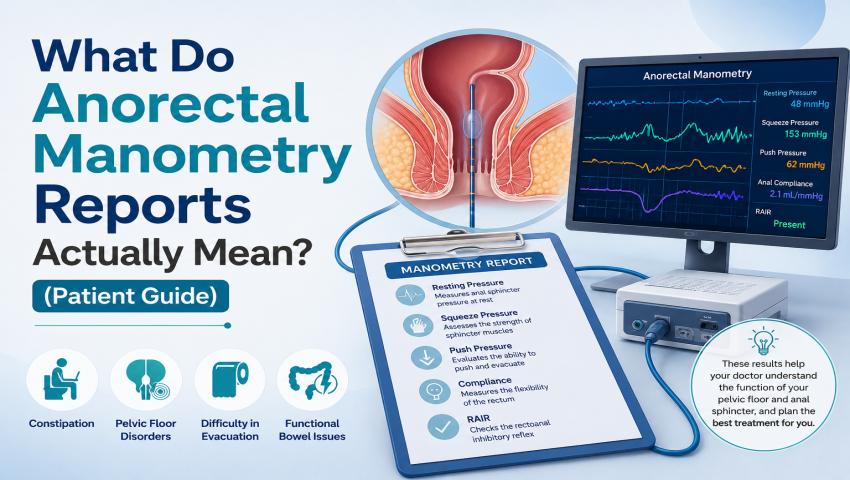
The procedure itself takes only about 20 to 30 minutes. A small, flexible tube called a catheter is placed into the rectum. The tube has a tiny balloon at the tip and pressure sensors along the sides. As the balloon expands gently, the sensors measure your muscle responses. It does not cause pain, though you might feel a slight pressure or a mild urge to pass stool.
Understanding Your Anorectal Manometry Report in Simple Words:
When you receive your final report, you will see several specific medical measurements. Let us translate those complex terms into everyday English:
- Anal Sphincter Resting Pressure: This is the pressure your muscles maintain while you are completely relaxed. It keeps the anal canal closed tightly to prevent accidental leakage.
- Anal Sphincter Squeeze Pressure: This measures the highest pressure when you actively tighten your muscles, like trying to hold back a bowel movement. It shows the strength of your voluntary muscles.
- Rectal Sensation: This test measures how soon you feel the balloon inflating inside your rectum. It tells the doctor if your rectal nerves are overly sensitive or under-sensitive.
- Rectoanal Inhibitory Reflex (RAIR): This is an automatic reflex. When stool enters the rectum, the internal anal muscle should relax automatically. This reflex is critical for normal bowel function.
- Push/Balloon Expulsion Test: You will be asked to push the small balloon out of your rectum. This measures how well your muscles relax when you try to pass stool.
Normal vs Abnormal Results: What Do They Mean?
Your doctor will compare your numbers against standard medical ranges. Understanding Anorectal manometry normal values helps you see where your muscles need support.
If your report shows numbers outside the standard range, it confirms anorectal manometry abnormal results. This gives your medical team a clear path forward to build a custom recovery plan.
Common Problems Detected in Anorectal Manometry Tests:
Pelvic Floor Dyssynergia (Anismus)
When you try to pass stool, your pelvic floor muscles should relax completely. In dyssynergia, these muscles tighten up instead. It acts like pressing the brake and the accelerator at the same time, causing severe chronic constipation.
Fecal Incontinence
If the resting or squeeze pressures are much lower than normal, the muscles cannot close tightly enough. This causes accidental leaks of gas or stool.
Hirschsprung's Disease
This is a rare condition where nerve cells are missing in parts of the intestine. The test detects this if the automatic relaxation reflex (RAIR) is entirely missing.
Rectal Prolapse or Intussusception
The pressure readings can show if the tissue of the rectum is slipping out of place during straining.
Symptoms Linked to Abnormal Manometry Results:
Abnormal muscle pressures inside the anal canal directly cause uncomfortable daily symptoms. You might recognize some of these common signs:
- Chronic, Severe Constipation: Spending a long time in the toilet and straining hard without success.
- Incomplete Evacuation: Feeling like your bowels never empty out fully after a bathroom visit.
- Accidental Bowel Leakage: Passing stool or gas involuntarily while walking, lifting weights, or coughing.
- Frequent, Sudden Urgency: Feeling a sudden, frantic rush to use the bathroom, even if there is very little stool to pass.
- Anal Pain: Experiencing persistent aches or sharp pain during or right after bowel movements.
What Happens After an Anorectal Manometry Test?
Once the test finishes, the doctor removes the catheter gently. You can return to your normal daily routine, work, and diet immediately. There is zero downtime needed. Your doctor will review the numerical charts to design a targeted anorectal manometry treatment plan. Treatment rarely requires surgery. Instead, it focuses on retrained muscle habits.
Common Treatment Options Include:
- Biofeedback Therapy: This is a highly successful, non-invasive therapy. A specialist uses computer screens to show you your muscle movements in real-time. You learn how to relax and contract the pelvic floor muscles correctly.
- Pelvic Floor Physical Therapy: Directed physical exercises to strengthen weak sphincter muscles or relax overly tight ones.
- Dietary Modifications: Custom adjustments to your daily fiber intake, fluid schedules, and natural stool softeners.
- Medication Management: Specific prescriptions to adjust bowel consistency or calm overactive rectal nerves.
When Should You Talk to a Gastroenterologist About Your Report?
You should schedule a follow-up consultation as soon as your report is ready. Only a trained gastroenterologist or gastro physiologist can look at these numbers in the context of your overall health. If you live in Maharashtra, getting specialized diagnostic care is easy. You can book an Anal Manometry in Pune at leading gastro clinics. This gives you direct access to accurate testing technology and experienced doctors.
Do not try to self-diagnose your report using random online forums. A slightly low or high number might be completely harmless when combined with your other health factors. Let a specialist interpret the details and guide your recovery safely.
Conclusion:
Anorectal manometry reports are excellent diagnostic tools. They take the guesswork out of complex bowel disorders. Instead of suffering in silence with chronic constipation or leakage, this test pinpoints exactly which muscles need help. Remember that abnormal results are simply a guide to help you heal. Highly successful, non-surgical therapies like biofeedback can retrain your muscles and restore your lifestyle completely.
If you are experiencing persistent bowel issues, take action early. Consult a dedicated expert like Dr. Rupali Bandgar-Jankar, who brings over 8+ years of experience as an expert gastro physiologist. Booking an Anorectal manometry test in Pune, India will give you the clear answers and personalized treatment you need to reclaim your comfort and digestive health.