

- 09/07/2025
- Dr. Rupali Bandgar
- 0 Comments
- Blogs
Esophagus Manometry: Who Needs It and Why?
Do you often face trouble swallowing your food? Does it feel like food is stuck in your chest? Many people mistake these issues for simple acid reflux. They keep taking antacids without getting any relief. When regular treatments fail, doctors need a deeper look inside your food pipe. This is where an esophagus manometry test becomes vital.
If you are experiencing these painful symptoms, consulting a specialist is the first step. Dr. Rupali Bandgar-Jankar is a highly trusted Gastrophysiologist in Pune with over 8 years of experience. As the Head of the GI Motility Department at Kaizen Gastro Care, Dr. Rupali Bandgar-Jankar specializes in advanced diagnostic tests. In this guide, we will break down the manometry meaning, who needs this test, and how it helps you find the right treatment.
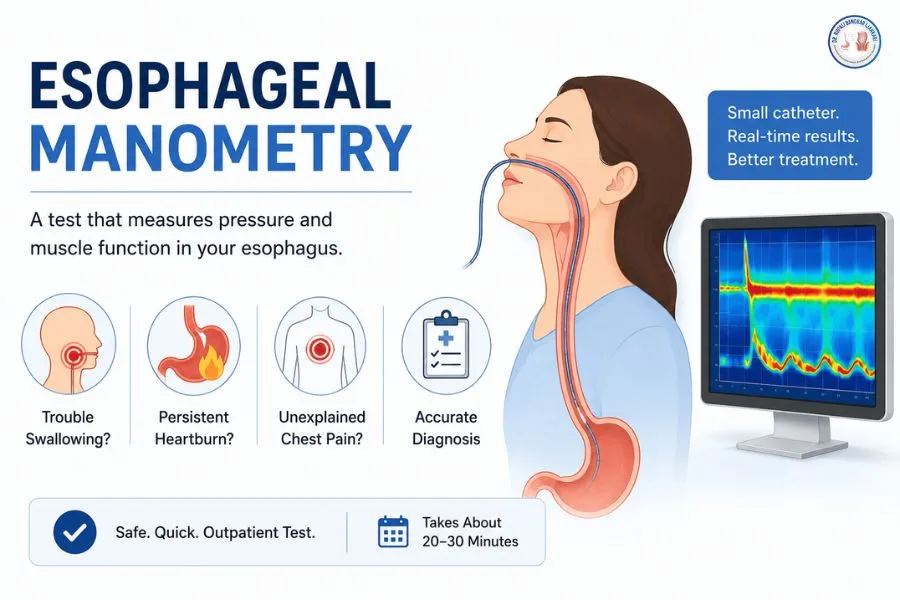
What Is Esophageal Manometry?
To understand this procedure, we must first look at the basic manometry meaning. In simple medical terms, manometry is a test used to measure pressure and muscle contractions in the digestive tract.
Therefore, an esophageal manometry test specifically measures how well your esophagus (food pipe) works. Your esophagus is a muscular tube that moves food from your mouth down to your stomach. It needs to squeeze in a coordinated, rhythmic wave to push food downwards.
An manometry esophagus evaluation checks the strength and coordination of these muscle waves. It also measures the manometry pressure of the muscular valves at the top and bottom of the food pipe. If these valves do not open or close at the right time, you will face severe discomfort. Today, experts like Dr. Rupali Bandgar-Jankar use high-resolution manometry. This advanced version uses modern sensors to create a highly detailed, colorful pressure map of your food pipe.
Who Needs an Esophagus Manometry Test?
Your doctor will not recommend this test for a simple, occasional stomach ache. It is specifically meant for individuals with persistent, unexplained swallowing difficulties. According to Dr. Rupali Bandgar-Jankar, you may need an esophagus manometry check if you experience:
- Dysphagia: Difficulty swallowing solid food, liquids, or both.
- Unexplained Chest Pain: Non-cardiac chest pain that feels like a heart attack but is actually caused by esophageal spasms.
- Persistent Heartburn: Severe acid reflux symptoms that do not get better with standard medications.
- Pre-Surgery Evaluation: If you are planning to undergo surgery for severe acid reflux (GERD), surgeons require this test first to ensure your food pipe muscles are strong enough to handle the structural change.
Conditions Diagnosed by Esophageal Manometry
A standard endoscopy can only see structural issues like ulcers or tumors. It cannot check if the muscles are moving correctly. That is why an esophagus manometry test is the gold standard for diagnosing functional muscle disorders. Here are the primary conditions diagnosed using high resolution manometry:
- Achalasia: A rare condition where the lower esophageal sphincter (valve) fails to relax. This prevents food from entering your stomach easily.
- Nutcracker Esophagus (Jackhammer Esophagus): A disorder where the contractions in the food pipe are coordinated but show extremely high manometry pressure, causing severe chest pain.
- Diffuse Esophageal Spasm: Uncoordinated, unorganized muscle contractions that prevent food from traveling down smoothly.
- Scleroderma: A systemic disease that can cause the smooth muscles in the lower food pipe to stop moving entirely.
How Is the Esophageal Manometry Test Performed?
It is completely normal to feel a bit anxious about the procedure. However, knowing what happens can make you feel comfortable. The esophageal manometry test is done on an outpatient basis, meaning you can go home the very same day. Here is the step-by-step process:
- Numbing: The medical team applies a local anesthetic spray or gel to numb your nose and throat.
- Catheter Insertion: A thin, flexible, pressure-sensitive tube is gently passed through your nose, down your throat, and into your stomach.
- Swallow Tests: Once the tube is correctly in place, you will lie down on your back. The team will ask you to take small sips of water at regular intervals.
- Recording Data: As you swallow, the sensors on the tube measure the exact manometry pressure and muscle patterns. A computer records these movements as a visual map.
- Removal: Once all the readings are successfully recorded, the tube is smoothly pulled out.
The entire process usually takes about 20 to 30 minutes. You might feel a slight tickle in your nose or a mild sore throat afterward, but this disappears quickly.
How to Prepare for an Esophagus Manometry Test
To get highly accurate results, proper preparation is necessary. Dr. Rupali Bandgar-Jankar recommends following these standard guidelines before your appointment:
- Fasting: Do not eat or drink anything for at least 4 to 6 hours before the test. An empty stomach prevents nausea and ensures safety.
- Medication Review: Inform your doctor about all the medicines you take. You may need to temporarily stop taking certain drugs, especially those for acid reflux, muscle relaxants, or pain relief, 24 to 48 hours before the test.
- Discuss Allergies: Always inform the clinical team if you have any specific nasal allergies or past nasal surgeries.
If you are wondering about the cost, the esophageal manometry test price in India varies depending on the technology used and the clinic location. Standard clinics offer traditional testing, but advanced centers use high-resolution manometry for much better diagnostic accuracy. It is best to contact your local clinic directly to confirm the exact esophageal manometry test price and book your slot.
Understanding Esophageal Manometry Test Results
Once the test is finished, the computer generates a detailed report showing the movement waves and pressure points. Reading these complex charts requires special training.
A qualified professional like Dr. Rupali Bandgar-Jankar will analyze the waves to check if your lower sphincter opens correctly and if the muscular contractions are well-timed. If the pressure readings are too high or too low, it points directly to a specific muscle disorder. Armed with these precise results, your doctor can design a targeted treatment plan, which may include specific medications, dilation, or specialized surgery.
Conclusion
An esophageal manometry test might seem intimidating at first, but it is a safe and highly precise tool. It takes the guesswork out of complex digestive issues. If you are struggling with painful swallowing or chronic reflux, do not suffer in silence.
Consulting an expert like Dr. Rupali Bandgar-Jankar, a leading Gastrophysiologist in Pune, ensures you get the best medical care. With her 8 years of specialized experience, she can accurately guide you through the process and help you live a healthy, pain-free life.